
Written Turkish Language
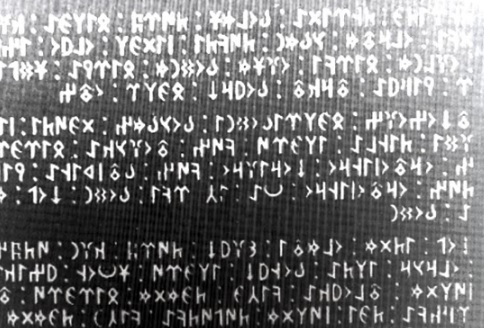
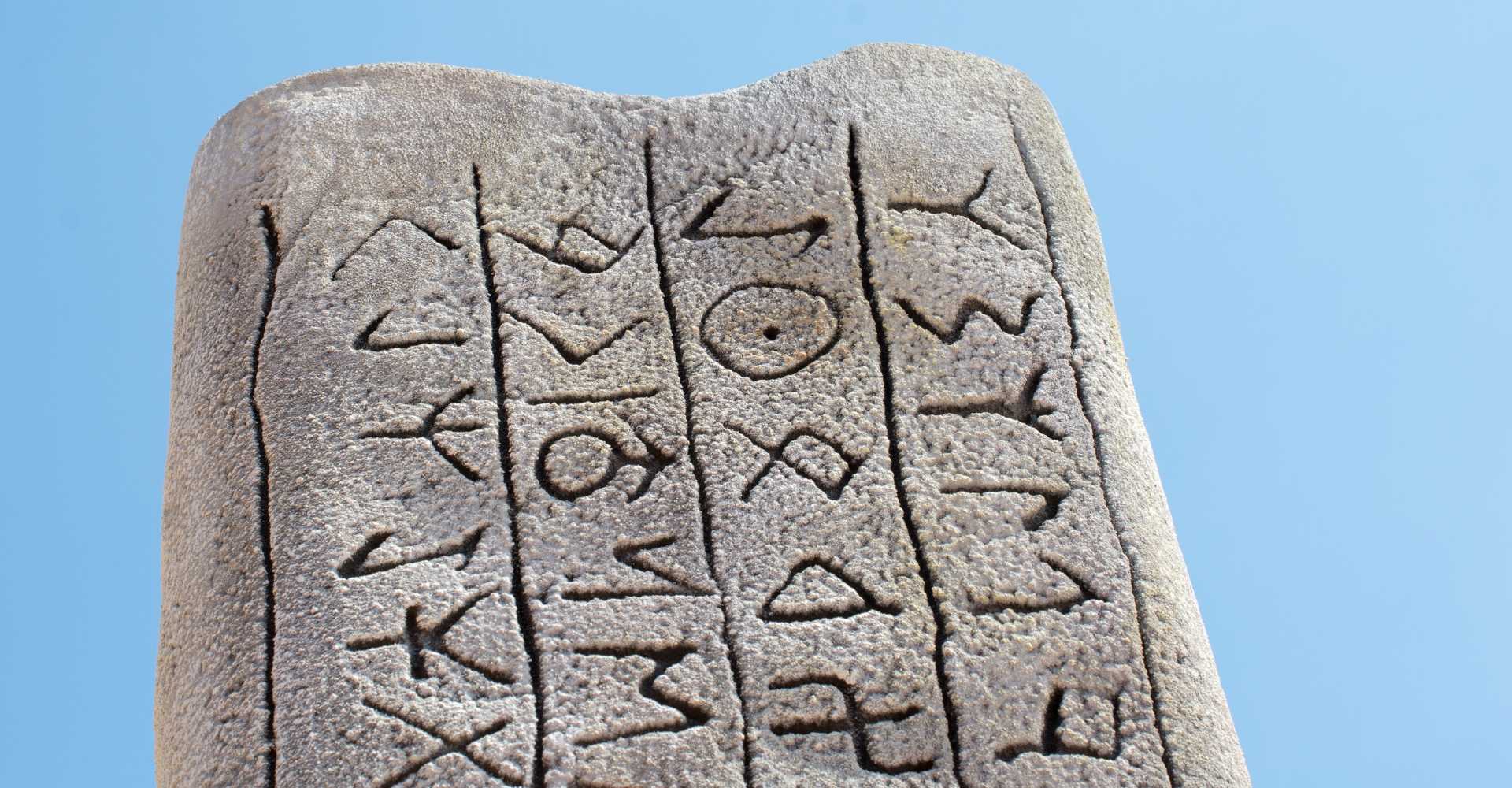
Göktürk and Orkhon scripts
If you read any Turkish newspaper nowadays, you'll find that the vocabulary is quite similar to occidental languages. Certainly, the alphabet they use is not very different from the ones used in the West.
But it was not always like this!
The old Turkic language was written in its own alphabet, which looks very similar to the Germanic runes (although there is really no relation between them). The Göktürk or Orkhon script is thought to derive from the Aramaic alphabet, or perhaps from Chinese scriptures. About two hundred inscriptions are preserved, and they all stem from the area of Mongolia, dated from the 7th to the 10th century.
Which scripts have Turks adapted to their language?
Ottoman Turkish Alphabet
When Turkic peoples began to move south to the Anatolia region in the following centuries, they came into contact with Byzantine, Arabic and Persian cultures. The Ottoman Empire's official script was the Ottoman Turkish alphabet, an adaptation of the Arabic alphabet which worked quite well for words loaned from Arabic and Persian, but not so well for the vernacular.
Modern Turkish Alphabet
Finally, this script was relinquished officially in 1929, as the westernization of the nation was in full swing. In its place, the Latin alphabet used across most of Europe and the Americas was adopted. Of course, it needed a few modifications to suit the Turkish language, but only seven new characters were added. To us, this seems like an obvious advantage, since we don't need to deal with a complicated writing system to communicate within Turkey. However, this represented a severe shock for the Turks of the first half of the 20th century. Schools played a key role, and nowadays the adapted Latin alphabet's use is fully extended across the country. In fact, there is an incredibly small number of people able to read a newspaper from... less than a century ago! Imagine such an obstacle just to study a 90-year-old document.