
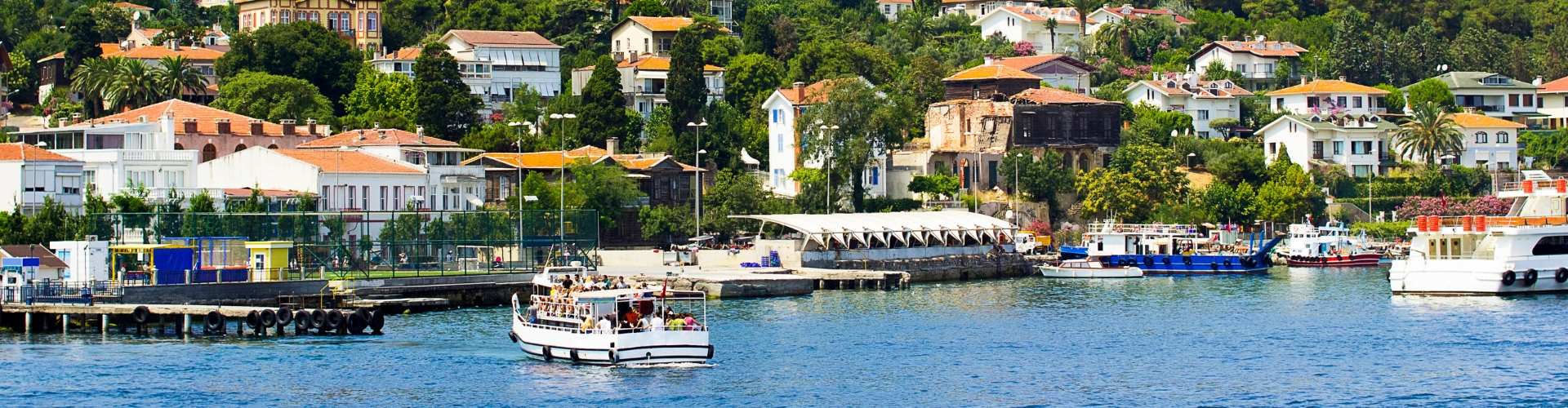
Princes' Island from an old Greek Istanbulite
Istanbul has been a cosmopolitan city throughout history. Even though it has been homogenized in the last century, many ethnic minorities are still living in the city such as Arabs, Armenians, Greeks, Bulgarians, Jews, Kurds, etc. In the dialogue, you’ll hear an Istanbulite Greek talking about old times in Princes’ Islands.
Transcript
Erkek: Merhaba, bize biraz eskiden bahsedebilir misiniz? Adalar nasıldı eskiden?
Kadın: Tabii. Birçok Yunan, Türk, Ermeni ve Yahudi arkadaşlarımız birlikte yaşardık. Çok asil bir adaydı.
Erkek: Sadece adada mı yaşardınız? Yoksa Istanbul’a gider gelir miydiniz?
Kadın: Evet, Istanbul’a birçok kişi her gün gider ve gelirlerdi. Şimdi de öyle. Eskiden klasik vapurlar vardı ve daha eskiydi. Şimdi daha hızlı vapurlar var.
Erkek: Şu an kaç Yunan yaşıyor adada, biliyor musunuz?
Kadın: Tam sayı bilinmiyor. Ama 70 civarı diyorlar.
Erkek: Önceden nasıldı?
Kadın: Önceden çok daha fazla insan yaşardı tabii ki. Belki binlerce. Eskiden okulumuzda yüzlerce öğrenci eğitim alırdı şimdi 2-3 öğrencimiz var sadece.
Erkek: Yaz aylarında sayı artıyor olmalı.
Kadın: Evet yaz aylarında Istanbul’dan ve Yunanistan’dan birçok kişi geliyor. Kalabalıklaşıyor. Çünkü burada birçok kişinin yazlıkları var.
Erkek: Siz neden hep adada yaşamak istiyorsunuz?
Kadın: Bilmiyorum, ben seviyorum. Benim bütün ailem buralı. Büyük annem büyük babam… Büyük babam balıkçıydı. Tekneyle her gün balığa çıkardı. O zamanlar böyle büyük vapurlar yoktu. Küçük kayıklar vardı. Büyük babam çok kötü havalarda bile balığa çıkardı. İşte öyle yani bütün anılarım burada.
Erkek: Peki çok teşekkür ederim.
Kadın: Ben teşekkür ederim.
Translation
Man: Hello, can you tell us a little bit about the past? How were the islands used to be?
Woman: Sure. We used to live together with many Greek, Turkish, Armenian, and Jewish friends. It was a very noble island.
Man: Did you only live on the island? Or would you shuttle to Istanbul?
Woman: Yes, many people would go and come to Istanbul every day. Now it is the same. There used to be classic ferries and were older. Now there are faster ferries.
Man: How many Greeks currently live on the island, do you know?
Woman: The whole number is unknown. But they say around 70.
Man: How was it before?
Woman: Of course, many more people lived before. Maybe thousands. In the past, hundreds of students were educated in our school, now we only have 2-3 students.
Man: The number should be increasing in the summer.
Woman: Yes, many people come from Istanbul and Greece in the summer months. It gets crowded. Because there are many summer houses here.
Man: Why do you always want to live on the island?
Woman: I don’t know, I love it. My whole family is from here. My grandmother, grandfather … My grandfather was a fisherman. He used to go fishing every day by boat. There were no such large ferries back then. There were small boats. My grandfather used to go fishing even in very bad weather. That’s it, all my memories are here.
Man: Well, thank you very much.
Woman: Thank you.
Grammar Notes
Words like “önceden” or “eskiden” are very useful when using this structure (-ArdI) because they indicate the time. You can begin a sentence with one of those.
—
The suffix: -ArdI
When there are two consecutive actions, you can use a structure consisting of -Ir/-Ar (aorist suffix) and -Ir/-Ar + dI (past habits suffix) as seen in the examples above.
“Kötü havalar” means bad weather conditions.
Vocabulary
Ready to Use This Out Loud?
You've read the transcript and grammar — now speak it. A short session with a native-speaking teacher turns passive listening into confident, natural speaking.